The Seat Across From Mine on the Last Train Home
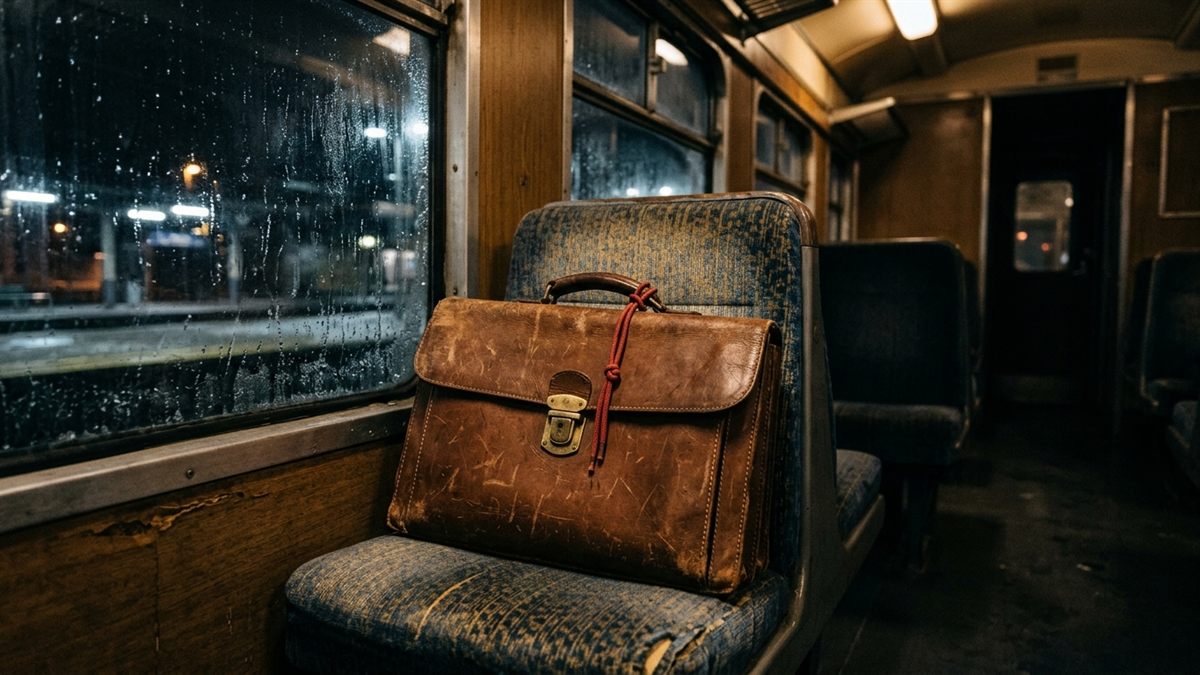
By the time my meeting in downtown Chicago wrapped up past eleven o'clock, freezing sleet had turned every platform clock blurry with frost. My phone battery had dropped to zero an hour earlier, so when the 11:40 express pulled into Track 4 with yellow lights glowing warmly behind rain-streaked windows, I didn't double-check the destination board. I climbed aboard the nearest quiet carriage, collapsed onto a corner bench, and pulled my wool collar around my ears.
Only one other passenger sat in the car: an older man in a charcoal overcoat sitting directly across the narrow aisle. Resting on the empty seat beside him was a battered brown leather briefcase with a distinctive brass clasp—and a faded red baggage tag knotted through the handle.
My breath caught in my throat.
I knew that red tag. My younger brother, Thomas, had tied a strip of red climbing cord onto his leather briefcase twelve years ago before boarding a regional train in Ohio—and vanishing without leaving a forwarding address, a bank withdrawal, or a single phone call behind.
A Pattern Only Family Would Recognize
I stared at the handle for three full stations as streetlights swept rhythmically across the wet windows. Was it coincidence? Millions of travelers tied bright cord onto dark luggage so nobody grabbed the wrong bag off a rack.
Yet as the train slowed past the river overpass, the stranger shifted the briefcase onto his lap, revealing the lower right corner where the leather had been scorched into a jagged crescent—the exact burn mark left when Thomas accidentally leaned his bag against my rusty radiator pipe during Thanksgiving of 2013.
"Excuse me," I said, leaning slightly across the aisle so my voice stayed steady above the rattle of the tracks. "Where did you pick up that leather briefcase?"
The older man looked up slowly. He didn't seem startled or defensive; his eyes were tired, ringed with deep lines that looked like years of quiet miles.
"Found it left behind at a bus depot locker auction in Toledo six years ago," he answered calmly, resting one hand flat on the scuffed leather. "No ID inside. Just three engineering notebooks, an expired library card, and a folded photograph of two boys standing beside a yellow pickup truck."
My fingers clenched around the edge of my seat. That yellow pickup had belonged to our grandfather.
"Why keep it for six years if there wasn't any money inside?" I asked softly.
"Because the person who left it didn't abandon it carelessly," the man replied, reaching inside his coat pocket. "Look closely at the brass clasp. Someone sealed a spare house key and an unmailed envelope inside the lining pocket behind the stitching. I spent four winters driving regional routes hoping I'd eventually match the name on the library card to a real address—until I retired from the rail line last spring."
What Thomas Never Sent
He unbuckled the leather flap and drew out a yellowed envelope taped carefully inside the inner seam. My own name was printed across the front in Thomas's slanted block handwriting, dated two days after he disappeared.
With trembling hands, I slid my thumb under the unglued flap as the train glided into a quiet suburban station neither of us had planned to get off at.
Inside wasn't a dramatic confession or a crime story. Thomas wrote that he had lost our shared apartment deposit in an unlicensed crypto brokerage scam back in 2014—money our mother had quietly borrowed against her retirement pension to help us start fresh after college. Paralyzed by shame and terrified of facing our mother after losing her life savings, he had walked onto a cross-country bus believing he needed to earn every penny back in silence before he earned the right to come home.
He hadn't vanished because he stopped caring; he had vanished because he thought failure disqualified him from being a brother.
At the bottom of the page, almost faded where the ink met the fold, was a postscript listing the small northern logging town where he hoped to find steady mill work under a temporary warehouse contract.
Following the Tracks Back
"I still ride the late express twice a week out of habit," the retired conductor said quietly as I folded the letter back into my coat. "My daughter works night shifts at Mercy Hospital down the line. When you kept staring at that red climbing cord, I figured either you knew the boy in the yellow truck—or you were him."
I didn't sleep a wink after reaching home at two in the morning. Before sunrise, I borrowed my neighbor's charger, called the town clerk's office in northern Michigan using the postscript name, and found a small welding workshop registered under Thomas's middle and last name three miles outside town.
When I knocked on his shop door forty-eight hours later, holding the scorched leather briefcase in both hands, Thomas dropped a steel wrench onto the concrete floor and stood frozen for ten long seconds before pulling me into the tightest hug of my life.
He had spent a decade saving every spare dollar in a credit union account waiting until he hit the full balance—never realizing that our mother had forgiven him seven years earlier, and all any of us ever wanted was his voice at the dinner table.
Sometimes a wrong train at midnight isn't a mistake at all. Sometimes it's the only track left that leads someone home.