The Lockout Notice Taped to the Wrong Glass Door
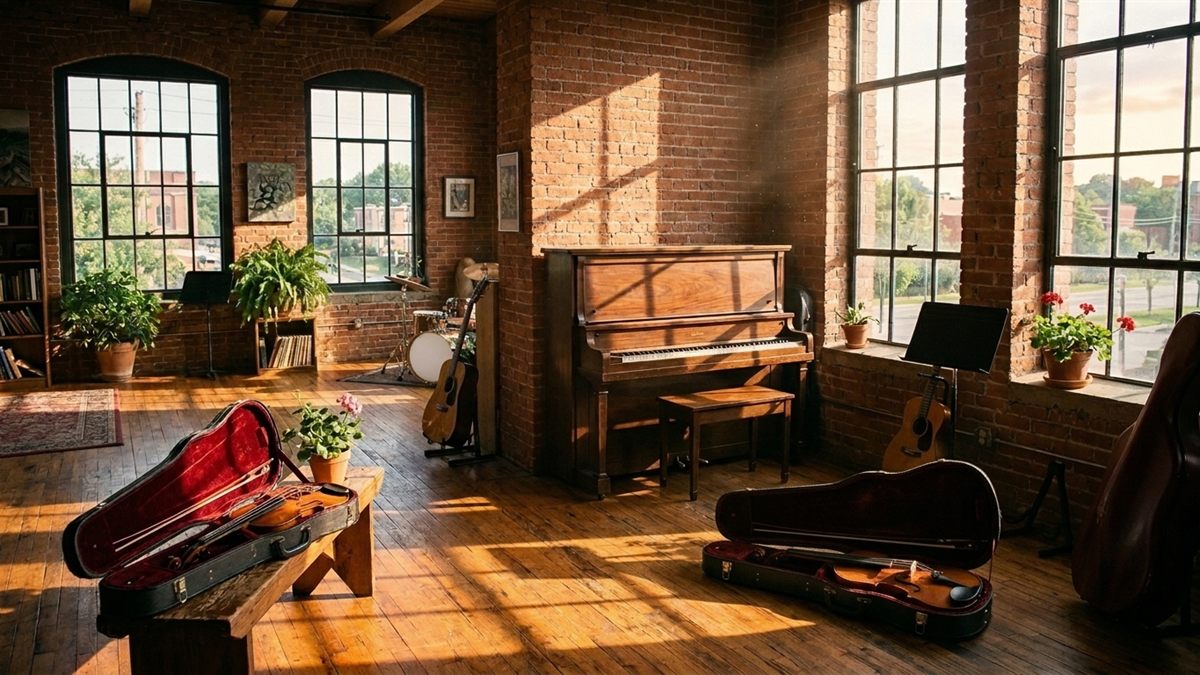
For twenty-two years, Riverbend Community Music occupied the sunlit second-floor studio above the brick corner arcade on Oak Street. Every afternoon after school, dozens of neighborhood kids filed up the worn oak stairs clutching violin cases and battered brass trumpets, paying sliding-scale tuition kept affordable thanks to a quiet fifty-year lease signed back when old Mr. Holloway still ran the hardware store downstairs.
Three months after Mr. Holloway passed away peacefully, his twenty-nine-year-old grandson, Julian, arrived from out of state wearing mirror sunglasses and calling himself a "boutique urban-redevelopment principal."
Within his first week inspecting the brick building, Julian decided an after-school music conservatory didn't match his vision for high-margin luxury loft studios. Even though our written lease still carried fourteen valid years remaining with every monthly rent check cleared on the first of the month, Julian marched upstairs on a rainy Monday afternoon and taped a bright red 48-Hour Commercial Breach & Lockout Notice straight across our glass entryway door—claiming our afternoon cello rehearsals constituted an "unpermitted noise nuisance."
"Pack up your music stands before Thursday morning," Julian snapped when our eighty-year-old director, Mrs. Alvarez, stepped gently into the hallway holding our signed lease binder. "My commercial contractors start gutting the upper floor Friday at eight, and I'm not entertaining sentimental lawsuits from a charity school."
What Julian Never Read Behind the Bronze Plaque
Mrs. Alvarez didn't raise her voice or tear down the bright red sticker. Instead, she walked calmly back to her upright piano, asked the parents waiting in the foyer to take careful photographs of Julian's lockout tape beside the hall clock, and dialed one local number from an old green address book: the Municipal Cultural Preservation Office.
Julian had made the classic mistake of an heir who reads market square-footage appraisals without ever checking the county deed book.
Sixty years earlier, when the city sold the corner brick arcade to Julian's grandfather back in 1966 for a fraction of commercial land value during downtown renewal, the municipal deed didn't transfer unconditional private ownership. Embedded permanently inside the recorded title—commemorated right beside the front brick mailbox beneath a weathered green bronze plaque Julian had painted over last Tuesday—sat a binding Perpetual Civic Cultural Covenant.
Under that legal covenant, the entire second-floor auditorium was restricted exclusively to public youth arts or educational instruction for ninety-nine years—meaning any owner who attempted to convert the space into private residential lofts, revoke a compliant youth arts tenant, or alter the interior acoustics without City Council release triggered an automatic reversionary clawback, allowing the city to reclaim the building deed at its original 1966 municipal valuation.
Thursday Morning on the Staircase
At eight-thirty Thursday morning, when Julian arrived flanked by two locksmiths and a demolition foreman ready to drill out Mrs. Alvarez's brass cylinder lock, he found the Oak Street sidewalk unexpectedly crowded.
Standing patiently beside the front stairs weren't just twenty parents holding violin cases. Beside Mrs. Alvarez stood the City Solicitor, two municipal code enforcement officers holding certified copies of the 1966 deed covenant, and a local television crew invited down by the school district superintendent whose own daughter played flute on Tuesdays.
"Morning, Mr. Holloway," the City Solicitor said pleasantly, holding out an official Cease-and-Desist Injunction stamped by the county circuit court clerk that morning. "Before your locksmith touches that cylinder, we wanted to verify whether your redevelopment firm intends to forfeit title under Clause Seven of the 1966 Civic Covenant—or honor the remaining fourteen years on Riverbend Music's lease immediately."
Julian stood frozen on the damp granite steps as the television camera lens zoomed quietly onto his bright red lockout notice still taped across the glass behind him. His demolition foreman quietly slid his pry-bar back inside his tool belt and walked straight back to the work van without waiting for instructions.
Music Keeps Playing Upstairs
Facing immediate title forfeiture litigation—alongside a thirty-thousand-dollar municipal fine for painting over a registered historic landmark plaque without permit—Julian didn't just drop the eviction notice before noon. Within thirty days, embarrassed out of his boutique loft scheme and short on capital after banks froze his renovation line over the title cloud, he quietly sold the entire brick building at a steep discount straight to the non-profit Arts Preservation Trust funded by neighborhood alumni.
That Friday afternoon, Mrs. Alvarez peeled the last scrap of red tape cleanly off the glass studio door, propped open the stairwell window so autumn sunshine warmed the floorboards, and lifted her conductor's baton for the four o'clock youth strings rehearsal—right on time.