The Contractor Who Charged for Reclaimed Cedar Beams
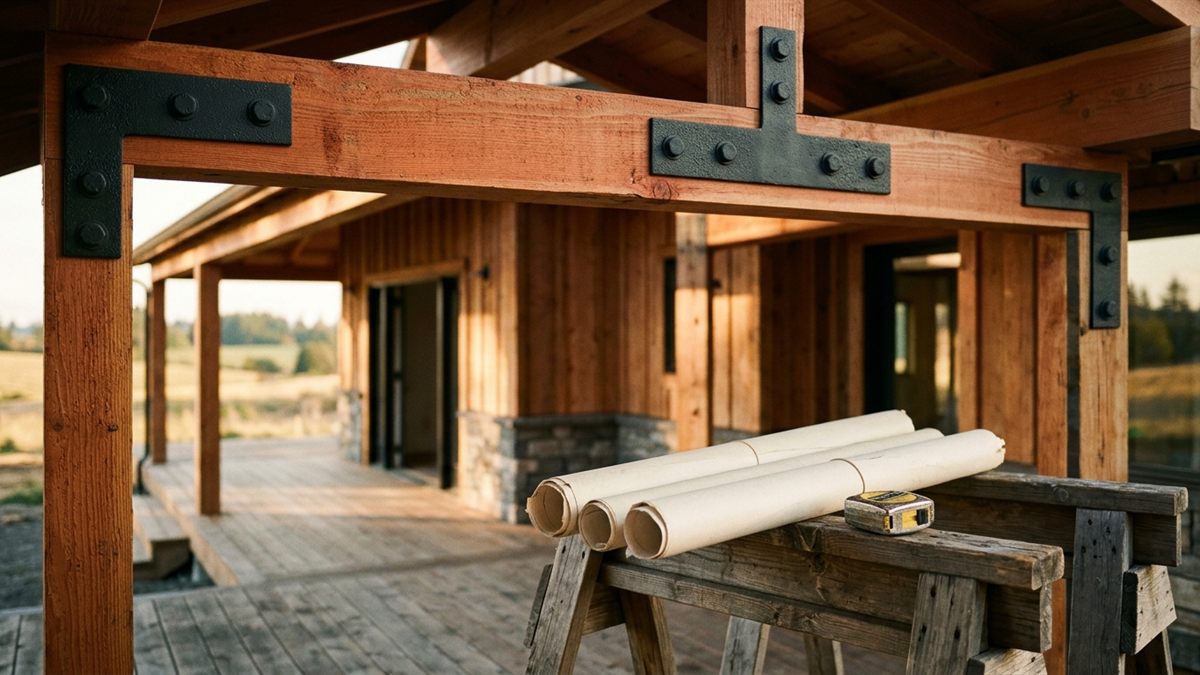
When a summer hailstorm cracked two roof trusses over my parents' farmhouse porch, my seventy-two-year-old father naturally called Dale Mercer—a longtime acquaintance from his Rotary club who ran a custom home remodeling outfit across the county.
"Don't worry about getting three quotes, Hank," Dale had clapped my dad warmly on the shoulder at the hardware counter. "We'll strip back the plaster, reinforce the main span with kiln-dried Western red cedar beams and galvanized steel plates, and seal everything up tighter than a bank vault. Family rate: thirty-eight thousand flat."
My parents trusted Dale enough to write a twenty-thousand-dollar deposit check on the spot and schedule final inspection for the Saturday after Thanksgiving—knowing I wouldn't be flying home from Chicago until late Friday night.
They didn't tell Dale what I actually did for a living in Chicago. As far as Dale remembered from high school, I was "Hank's quiet daughter who liked math." He had apparently missed the part where I spent the past eleven years working as a licensed structural forensics engineer inspecting commercial roof failures across Illinois.
What Was Hiding Above the Fresh Drywall
Saturday morning smelled of fresh latex paint and cedar sawdust—at least near the front porch columns where Dale had wrapped the visible exterior posts in aromatic tongue-and-groove trim.
Dale arrived promptly at ten o'clock in a gleaming white dually truck, holding a final eighteen-thousand-dollar invoice clipboard while joking with my dad about how crisp the new porch ceiling looked.
"Looks real clean, Dale," I said pleasantly, stepping out of the mudroom wearing dusty coveralls and carrying a canvas tool satchel I kept at my parents' place. "Mind if I poke my head through the attic scuttle for five minutes before Dad signs the final lien waiver? Just want to check the ridge collar ties before winter snow."
Dale's easy grin tightened by half a millimeter. "No need to get insulation dust in your hair, sweetheart. Building inspector already signed the green tag on the mailbox post."
Actually, the green sticker on the mailbox post was only a municipal electrical clearance for two new porch sconces—not a structural framing sign-off. Still smiling politely, I dragged the aluminum stepladder under the hallway hatch and pushed the plywood panel aside.
What greeted my headlamp beam wasn't kiln-dried Western red cedar.
Spanning the main porch load-bearing beam wasn't even structural-grade Douglas fir. Dale's crew had slapped together green, knot-ridden big-box construction pine—already twisting slightly with visible surface checks—spliced clumsily mid-span without steel gusset plates, anchored by standard drywall screws instead of structural ledger lags.
Even worse, my pocket pin-type moisture meter beeped immediately at twenty-four percent moisture content, and a fresh line of water staining was already creeping along the unsealed valley flashing Dale claimed he had replaced.
Reading the Invoice Line by Line
I climbed quietly back down the ladder, snapped twenty high-resolution timestamped macro photos on my phone, and stepped onto the front porch where Dale was tapping his ballpoint pen impatiently against the clipboard.
"Dale," I said calmly, handing my dad a cup of coffee so he wouldn't reach for his checkbook yet. "Item three on your contract specifies thirty-eight linear feet of kiln-dried clear Western red cedar structural headers, Simpson concealed steel hanger brackets, and new ice-and-water valley membrane. Which lumberyard delivered the cedar?"
"Mill Creek Supply," Dale answered smoothly without blinking. "Best timber in the state."
"That's interesting," I replied, turning my phone screen gently toward him so the high-resolution macro photo of a stamped green utility-grade pine ink mark—SPF #2 WET / BIG BOX LUMBER—filled the glass. "Because Mill Creek doesn't sell stamped spruce-pine-fir two-by-eights fastened with black drywall screws. Also, building codes in this county don't allow mid-span butt splices over an unsupported twelve-foot porch header."
Dale stared at the photo for three silent seconds. His jaw worked once before he tried a bluff. "My foreman must've mixed up two residential deliveries. Look, I'll knock two thousand off the final balance today so we call it square."
Karma Works by Building Code
"Not quite," I said evenly, pulling a printed state structural-inspection notice form from my satchel. "On Monday morning, either a crew of your licensed carpenters strips off that drywall, removes the green pine, and installs the exact engineered cedar beams and steel plates listed on your paid deposit contract under city building-department supervision—or I submit these photos alongside a formal contractor-fraud and unlicensed structural modification complaint to the state licensing board before noon."
Dale didn't cash a single dime of the eighteen-thousand-dollar balance. By seven-thirty Monday morning, Dale himself stood on a scaffolding plank in freezing drizzle supervising three veteran framers ripping down his cheap shortcut and hoisting genuine steel-flitched cedar beams into place while the municipal structural inspector watched every bolt torque to spec.
When my parents stepped onto their front porch in mid-December, solid timber rested cleanly above every column—and Dale Mercer learned never to judge a quiet engineer by how softly she asks for a stepladder.