The Neighbor Who Moved the Orchard Fence Three Feet
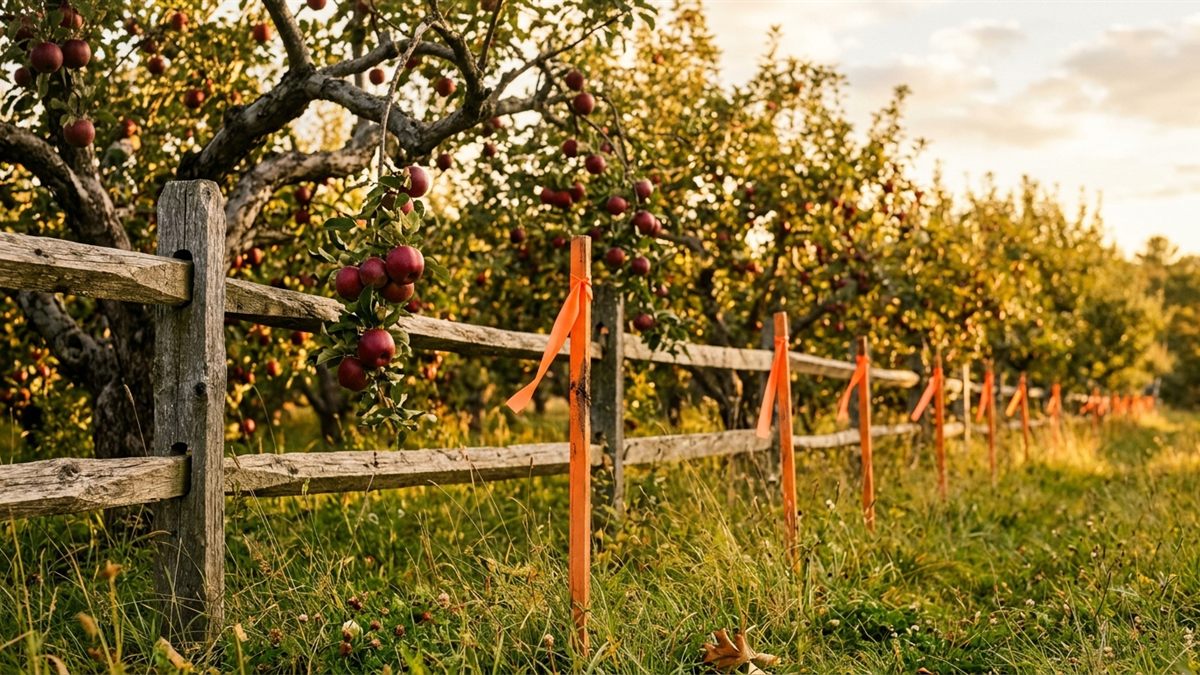
For forty-six years, a crooked cedar split-rail fence separated Walter Jenkins's two-acre heirloom apple orchard from the empty wooded parcel beside Miller Creek. Walter wasn't rich; he lived on a modest mechanic's pension, tended thirty grafted Honeycrisp and Northern Spy trees by hand, and gave half his October bushel baskets away to the elementary school kitchen down the road.
Then a developer cleared the neighboring woods and sold the newly built glass-and-slate home to a corporate consultant named Garrett Vance, who arrived driving a matte-black SUV and immediately began complaining about fallen apple blossoms drifting onto his freshly poured driveway.
"Those old trees look unkempt along my view," Garrett told Walter across the fence in June. "Why don't you sell me a ten-foot strip along the creek so I can put up clean arborvitae?"
"Those Northern Spies were planted by my late wife," Walter replied politely, leaning on his pruning shears. "I'm not selling a square inch of them."
Garrett didn't argue further—not while Walter was standing in his yard.
What Happened While Walter Was in Rehab
In late September, a minor fall off a low step ladder bruised Walter's knee badly enough that his doctor recommended three weeks at an inpatient physical therapy center twenty miles away. His niece watered his houseplants twice a week, assuming the quiet orchard behind the barn needed nothing until harvest.
When Walter's niece drove him back up the gravel lane on a crisp Saturday morning in October, Walter stepped out of the car and froze midway toward the gate.
Along the west boundary where his eight oldest apple trees had stood for four decades, raw red clay lay churned under excavator tracks. Every trunk had been cut flush to the dirt and hauled away, replaced by a pristine six-foot limestone retaining wall sitting clearly three feet inside Walter's mowed grass line—leaving Garrett's new paved firepit patio overlooking what used to be Walter's orchard row.
Garrett walked out onto his flagstone deck holding an espresso mug when he saw Walter staring silently at the limestone wall.
"Look, Walt, your old rails were rotting into my drainage ditch," Garrett called down briskly. "My landscaper checked the ditch centerline and straightened the boundary while you were away. Honestly, I did us both a favor—added curb appeal to the whole street."
The Concrete Marker Under the Mulberry Bush
Walter didn't shout across the new wall. He walked slowly back to his cedar tool shed, pulled a dusty rolled canvas tube out of his workbench drawer, and spread a county land plat dated 1978 across the hood of his pickup truck.
Garrett had made two fatal mistakes common to arrogant bullies who assume elderly neighbors never keep paperwork. First, the "drainage ditch centerline" wasn't the property boundary—it had been dug four feet inside Walter's lot in 1982 by Walter himself to drain spring runoff away from his apple roots.
Second, buried six inches beneath an overgrown mulberry bush near the creek stood the original cast-iron USGS corner survey pin stamped in brass, untouched since the county subdivided the farmland fifty years earlier.
Instead of arguing over the wall, Walter hired a state-licensed boundary surveyor on Monday morning, plus an arborist certified in agricultural tree valuation.
By Thursday afternoon, bright orange surveyor stakes marched cleanly down the center of Garrett's freshly poured limestone retaining wall—and cut straight through the outer third of Garrett's new custom flagstone firepit and outdoor kitchen chimney.
The Invoice Garrett Couldn't Brush Off
Under state timber-and-orchard trespass statutes, deliberately destroying mature fruit-bearing trees across a surveyed property line carries triple replacement damages calculated by trunk caliper, lost harvest yield, and root restoration—not cheap nursery saplings.
When Walter's quiet small-town attorney served Garrett with the certified survey, before-and-after satellite aerial imagery from August, and an arborist appraisal exceeding forty-eight thousand dollars—alongside a mandatory court petition to remove the encroaching limestone wall and concrete footing at Garrett's sole expense—Garrett's smug espresso smile evaporated permanently.
His own title insurance policy refused to cover an intentional encroachment built without a permit or survey. Within six weeks, Garrett had to pay a demolition crew to jackhammer out half his brand-new stone wall and outdoor chimney, reimburse Walter every cent of the survey and arborist fees, and write a settlement check large enough to fund an entire community youth orchard program on the remaining side of Walter's pasture.
Spring came early to Miller Creek that year. Looking out across newly planted rows of crisp young apple saplings—protected by sturdy cedar posts set exactly on the iron survey pin—Walter poured himself warm cider and smiled at the quiet breeze coming off the creek.