The Attic Safe My Sister Claimed Was Empty
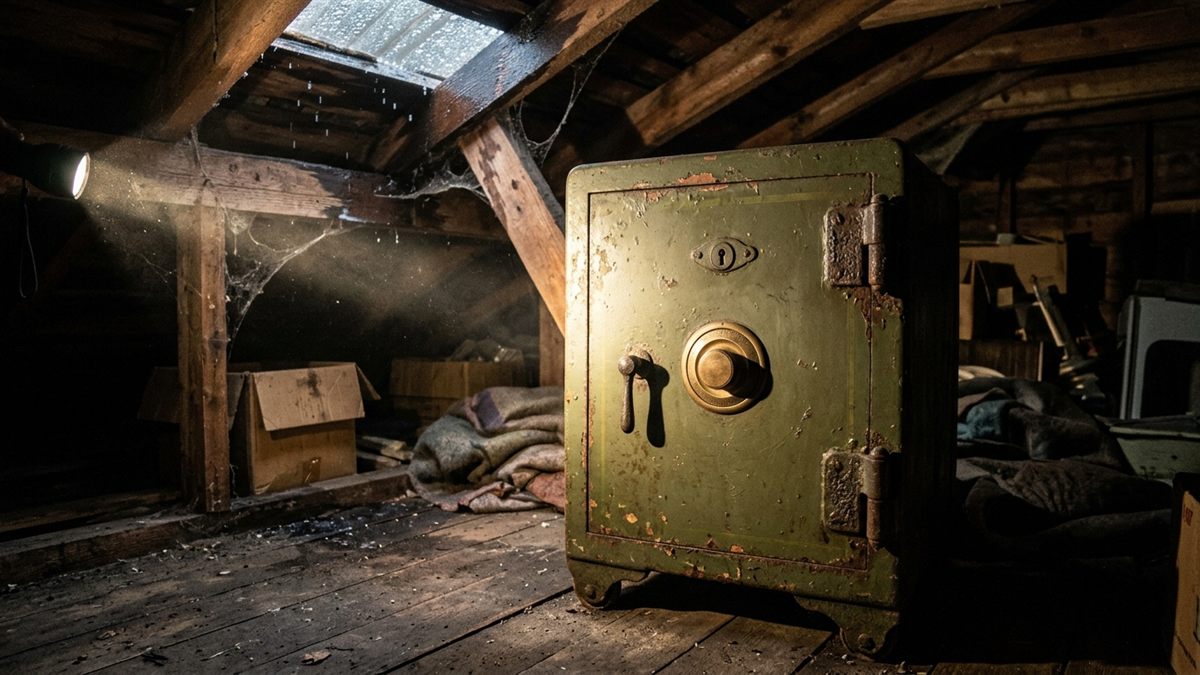
When Grandmother Ruth passed away in 2014, she left her Victorian farmhouse to my older sister, Claire, with one spoken request: that the two of us would split whatever remained inside the upstairs study once the estate settled.
At least, that was what my mother told me. Claire handled the paperwork because I was finishing my nursing residency three states away, pulling double shifts in an overcrowded county hospital. Whenever I drove home for holidays, Claire offered warm tea, patted my hand, and sighed over how heavy the property taxes had grown.
"There wasn't much left in the house anyway, Nora," Claire always said when I glanced toward the steep pull-down stairs to the attic. "Just cracked hatboxes and that heavy steel safe from Grandpa's hardware shop. The locksmith drilled the dial years ago and told me it was empty."
For twelve years, I believed her. Sisters didn't lie about empty safes.
The Night the Roof Gave Way
That changed during an October windstorm that ripped three rows of cedar shingles off the south dormer. Claire was out of town on a coastal spa weekend with her husband, and because I lived only forty minutes away now, she called me in a panic at midnight to ask if I could set buckets beneath the attic leak before the rain ruined the hallway plaster.
I climbed the narrow attic stairs with a heavy flashlight and two plastic pails. Rainwater drummed against the exposed rafters, dripping steadily onto an oilcloth tarp draped over the far corner—right atop the squat, olive-green safe Claire claimed had been drilled open years ago.
When I dragged the soaked tarp aside to move the buckets, my flashlight beam caught the solid brass dial on the front door.
It wasn't drilled. There wasn't a single scratch around the lock cylinder, and the steel handle sat flush and intact against the faceplate.
Even stranger, taped tightly underneath the top lip of the safe—hidden unless someone knelt completely flat to slide a bucket beneath it—was a small laminated luggage tag written in Grandmother Ruth's unmistakable looping cursive: Nora — 04 / 19 / 98.
Three Numbers and a Forgotten Birthday
April 19, 1998 wasn't my birthday. It was the day my mother died, when Claire was nineteen and I was only nine years old—the exact afternoon Grandmother Ruth had sat beside me on the porch swing and promised she would always keep something safe for my future.
My hands shook as I wiped rainwater off the dial. I spun it left past zero, stopped on four, reversed right to nineteen, and turned left gently toward ninety-eight.
A soft, heavy click echoed through the dark attic. When I pulled the handle, the thick iron door swung outward smoothly on well-oiled hinges.
Inside wasn't dust or mothballs. Stacked neatly inside a waterproof cedar box were three folded stock certificates, a thick binder of municipal bearer bonds from the late nineties, and a single unsealed cream envelope addressed to me in Ruth's handwriting.
Reading the Truth by Flashlight
I sat on an overturned crate beneath the dripping rafters and read my grandmother's letter twice.
She hadn't left the farmhouse to Claire alone out of favoritism. She had known Claire's husband was drowning in gambling debts back in 2013, and she had worried the house might eventually be mortgaged away. So she left the structure to Claire—knowing Claire could live in it without selling—while placing her entire lifetime savings inside the safe for me to claim once I finished school, trusting Claire to hand over the envelope after probate closed.
Claire had never mentioned the safe could open. She hadn't been unable to open it, either—she simply hadn't known the combination, and after trying every birthday she could remember, she had lied to keep me away from the attic while quietly searching for a discreet buyer to haul the locked safe off the property for cash value.
The folded receipt tucked under the cedar box confirmed it: a local salvage dealer's handwritten quote dated just three days before the storm, offering eight hundred dollars to remove "one locked antique floor safe, contents unseen."
Morning Light in the Hallway
When Claire returned early Sunday afternoon, expecting soaked plaster and grateful thanks, I was sitting at the dining room table with the cedar box open between us and a probate attorney's card resting beside my coffee mug.
She didn't deny it for long. Seeing the unbroken brass dial and Grandmother Ruth's envelope in my hand drained all the fight out of her.
"We were underwater on the mortgage," Claire whispered, burying her face in both hands. "I thought if I just sold the safe whole, I'd never have to know what was inside."
"You knew enough to keep me off those stairs for twelve years," I answered quietly.
I didn't take the house from her, nor did I demand interest on the decade I had spent paying off student loans while living in cramped studio apartments. Instead, I transferred the certificates and bonds into my own name with the estate attorney witnessing every signature, and offered Claire one clear condition: keep the farmhouse standing, pay off your husband's debts without touching another family heirloom, and never ask me to pretend we share the same story again.
Some mysteries take a storm to uncover. Once the roof is torn open, nothing stays hidden in the dark for long.