The Postcard Stamped From a Post Office Closed Twenty Years Ago
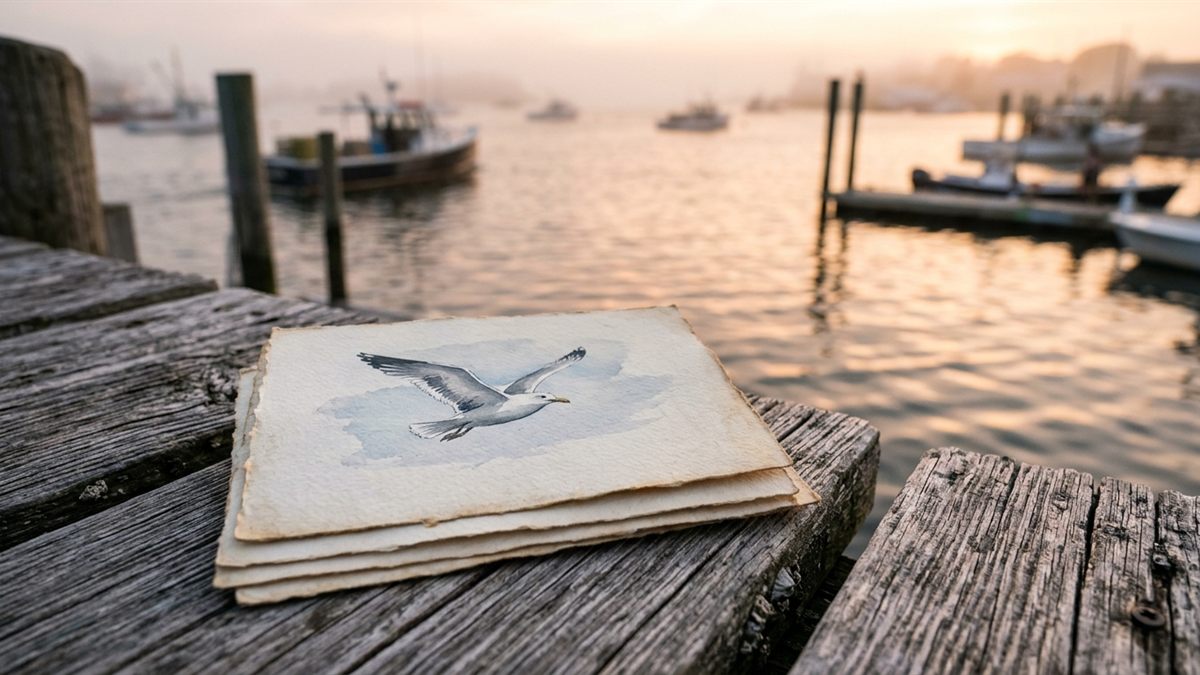
On May twelfth every year since we turned twelve, my twin brother, Owen, and I checked the mailbox with the same knot of quiet anticipation. Never failing by more than twenty-four hours, two identical plain cream postcards slipped through the slot: a hand-drawn gull perched atop a piling on the front, and just five typed words on the back—Happy birthday, boys. Keep steady.
There was never a return address, never an ink signature, and never a hint of why our father had packed a canvas duffel bag and walked down the gravel road in 2002 without telling our mother where he was heading.
What made the cards eerie wasn't only the silence. Up in the right corner of every single card sat a crisp purple circular cancellation stamp reading SOUTH HARBOR STATION, ME — 04859.
When we finally turned twenty-four and drove up the foggy Maine coastline to South Harbor to search for him ourselves, the convenience store clerk at the crossroads stared at our postcard like we had handed him a ghost's driver's license.
"Son," the old clerk said, tapping the purple cancellation ring slowly with one knuckle. "South Harbor Station burned clean to the pilings in January 2004. The postal service closed that zip code down permanently and routed mail through Camden twenty-two miles north. Ain't nobody stamped a card out of 04859 since before you finished middle school."
Tracing a Ghost Cancellation Mark
Owen and I stood on the empty gravel lot beside the harbor pier where charred foundation bricks still poked up through tall dune grass. If the post office hadn't existed since 2004, how had a freshly dated purple cancellation mark—reading MAY 09 2024—landed cleanly on our kitchen tables twelve hundred miles away just two years ago?
We drove straight up Route 1 to the Camden Regional Post Office and asked politely to speak with the longest-serving postal supervisor on shift.
A silver-haired postmistress named Evelyn stared through her bifocals at both postcards for nearly a minute before unlocking a back filing room and pulling out a dust-covered wooden ledger of retired coastal box-holders.
"Look closely at the ink bleed around the five," Evelyn pointed gently with her ballpoint pen. "That isn't an automated sorting laser from Portland. Somebody used an antique brass hand-canceler—the kind small contract post offices used before 2000—and dropped these cards inside a larger Priority Mail pouch straight to a sorting friend up the coast... no, wait. Look at the glue residue along the bottom edge."
Under oblique desk lamp light, a faint strip of removable archival tape glinted along the edge of the postcard—meaning each card had been mailed inside another sealed envelope to an automated collector, or pre-stamped and held somewhere waiting for annual release!
Evelyn flipped calmly through the retired South Harbor box records from 2002 until her finger stopped at Box 14: Martin & Clara Vance — Paid Through 2040 (Estate Forwarding Trust).
Inside the Harbor Attorney's Vault
Two blocks away above an insurance agency sat the cramped wood-paneled office of retired maritime lawyer George Halstead, whose name appeared as secondary trustee on Box 14.
When Owen and I showed George our driver's licenses and the row of twelve identical postcards, the elderly attorney exhaled heavily, stood slowly from behind his oak desk, and unlocked a heavy steel filing cabinet beside the radiator.
"I promised your father I wouldn't hand this envelope over until you both walked through my door together," George said quietly, laying a thick sealed manila packet between us.
Our father hadn't vanished across the country in 2002 to start a secret second family or dodge child support. Six months before he disappeared, he had been diagnosed with early-onset degenerative nerve failure after a shipyard chemical spill—and knowing our mother was already working two nursing shifts to keep our family afloat, he had discovered a ruthless clause in his maritime union disability settlement that paid full survivor benefits only if he vanished from the household ledger cleanly or took a dangerous off-books deep-sea salvage contract up north where nobody could trace his medical history before the payout vested.
Except the deep-sea vessel went down off Newfoundland in December 2003—one month before South Harbor Station burned down.
Before boarding that winter vessel, our father had quietly visited South Harbor's retiring postmaster—his childhood uncle—and hand-painted twenty-five small gulls on plain cream cards, pre-stamping every single May twelfth date twenty years into the future with the help of a trusted family lawyer who promised to drop two into the Camden outgoing chute every May so Owen and I would never feel completely unanchored while growing up.
Watching the Harbor Tide Turn
The second envelope inside George's cabinet held something neither of us had imagined: a pristine trust statement fed by the maritime union survivor settlement our father had secured before his boat sailed, patiently compounding through twenty years of coastal treasury bonds for our college loans and future workshops.
We drove back down to the charred foundation beside South Harbor Pier at sunset, standing beside the cold Atlantic spray with twenty-four postcards tucked safely inside our jackets. Our father hadn't stayed behind to watch us grow up—yet for twenty-four straight springs, he had still found a way to send two steady words across the water right on time.