The Unmarked Envelope Left on the Foyer Table
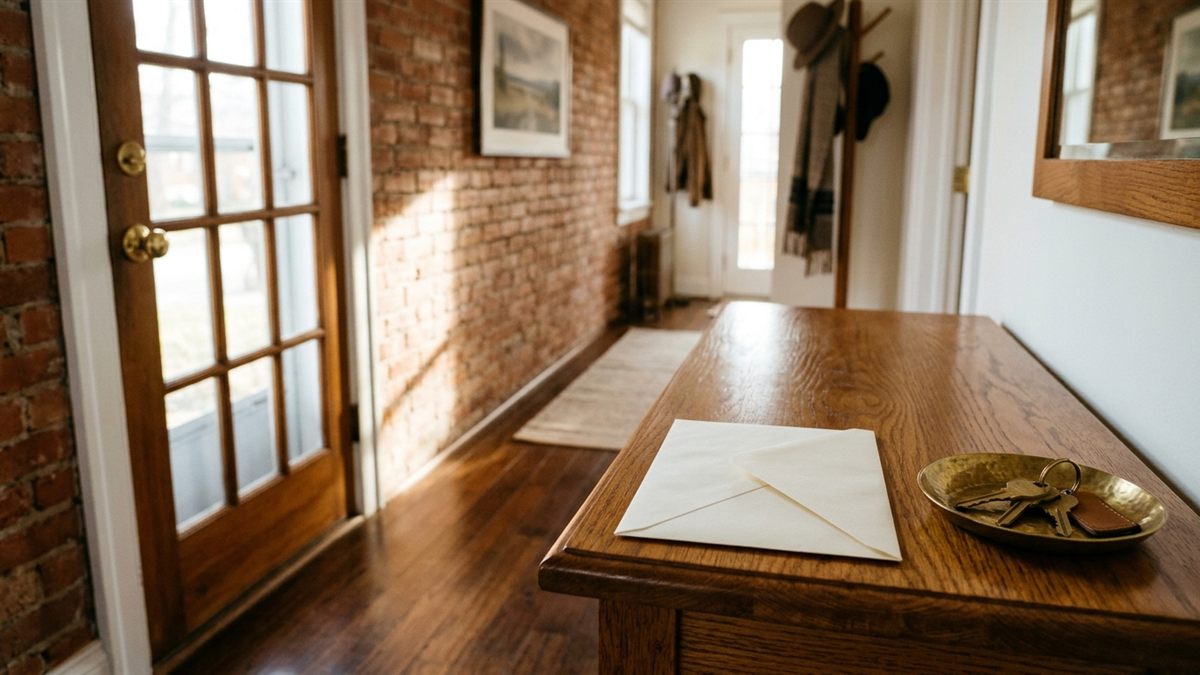
At seventy-eight, Eleanor Mercer walked with a slight limp from an old hip fracture, yet her memory remained sharper than most people half her age. After her husband died, her quiet brick bungalow on Linden Avenue stayed spotless thanks to a small rotating circle of help: her nephew Owen stopped by on Wednesdays to mow the lawn, her neighbor Brenda picked up groceries every Friday morning, and her part-time housekeeper, Rosa, came twice a week to iron linens and scrub the kitchen tiles.
Eleanor paid everyone generously and never checked receipts twice. Yet after a few small silver spoons vanished from her dining sideboard in September—and fifty dollars disappeared from the cookie tin beside the kettle—she felt a quiet ache that had nothing to do with money.
She didn't accuse anyone. Instead, on the first Monday of October, Eleanor placed a thick, unsealed cream envelope cleanly in the center of the oak foyer table beside her brass dish of spare keys.
Inside the envelope were six crisp twenty-dollar bills and a handwritten slip of paper folded neatly around them. She didn't write a name on the outside. She simply left the envelope sitting in plain view where anyone entering the hallway would notice it immediately.
Three Weeks of Quiet Observation
On the first Wednesday afternoon, Owen came in from mowing the backyard, wiped grass clippings off his sneakers, and paused beside the foyer table to pour himself a glass of iced water from the hall pitcher. Eleanor was resting in the sunroom just beyond the open French doors, watching sunlight filter through the ferns. Owen glanced at the thick envelope, tapped the corner slightly with his thumb, then walked toward the kitchen without opening it.
On Friday, Brenda set two brown grocery bags onto the bench beside the front door. She noticed the envelope right away—Eleanor saw her eyes linger on the unsealed flap—yet Brenda merely shifted the mail pile neatly beside the brass key tray so nothing blew onto the rug when the storm door swung shut.
Rosa came every Tuesday and Thursday morning, humming softly as she dusted the mantel and swept the entryway hardwood. Each time she polished the foyer table, she lifted the cream envelope carefully with two fingers, wiped the oak underneath with lemon oil, and set it back in the exact center before hanging up her apron.
By the third Monday, Eleanor almost felt ashamed of having set the small test at all. Perhaps the missing spoons had simply fallen behind the pantry shelves, and she had miscounted the grocery change in the cookie tin.
Then came Tuesday afternoon, when Owen stopped by unexpectedly while Rosa was upstairs changing the guest-room sheets.
What Happened When Nobody Was Watching
Eleanor had taken a cab to her physical therapy appointment down the street—or at least, Owen assumed she was still at the clinic. In reality, her therapist had rescheduled by phone an hour earlier, and Eleanor was returning quietly up the front walkway when she spotted Owen's pickup truck parked half across the curb.
Through the narrow beveled glass beside the front door, she saw Owen standing at the foyer table. He glanced once toward the upstairs stairwell where the vacuum hummed overhead, slipped two fingers inside the unsealed cream envelope, slid out the folded bills, and pushed the empty paper flap flat back onto the oak surface.
He pocketed the cash, stepped casually toward the back patio, and called loudly up the stairs, "Hey Rosa, tell Aunt Eleanor I dropped off her trimmed hedge bags by the alley!"
Before he reached his truck, Eleanor pushed open the front door and stood waiting on the porch steps.
Owen froze halfway down the stone path, his hand still resting inside his jacket pocket.
"Didn't you want to read the note inside first, Owen?" Eleanor asked gently.
The Note Wrapped Around the Cash
Owen stammered something about wanting to save her from leaving cash out where "strangers or repairmen might see it," pulling out the crumpled bills as though offering to hand them back.
Eleanor didn't touch the money. She walked calmly inside, picked up the flattened cream envelope, and unfolded the handwritten slip of paper that Owen hadn't bothered to read before pocketing the bills.
Written in neat fountain ink were ten simple words: For whoever needs help enough to ask me honestly.
"I never cared about the twenty-dollar bills, Owen," Eleanor said softly, looking at her nephew in the quiet hallway. "Last month you told me your carpentry van needed new brakes, and I gave you four hundred dollars without asking for a receipt. If you had knocked on my door and said you were short again, I would have written a check before dinner."
Owen stood silent on the porch mat, unable to meet her eyes.
"What hurts isn't losing money," she continued, taking the spare house key off his brass key ring cleanly without anger. "It's watching someone assume I'm too old to notice when trust gets broken."
Who Inherited the Quiet Loyalty
Eleanor never made a scene with the rest of the family, and she never filed a police report over the missing silver spoons. She simply changed the front deadbolt that weekend, leaving spare keys only with Brenda—who checked on her every single snowstorm without taking a dime—and with Rosa, whose own youngest daughter started nursing school that January with a quiet tuition check signed by Eleanor Mercer.
In the end, trust isn't tested when someone announces they're keeping score. It's tested in the ordinary minutes when nobody appears to be looking.